What is passive fire protection?
Passive fire protection (PFP) is the set of fire-resisting measures built permanently into a building’s structure and fabric that contain fire and smoke within the area where they start, protect escape routes, and maintain structural stability for a defined period. It works without power, activation or human intervention, which is what distinguishes it from active fire protection such as alarms and sprinklers.
The six core components are fire compartmentation, fire doors, firestopping, cavity barriers, structural fire protection, and fire-resisting glazing and ductwork.
In the UK, passive fire protection is governed by the Regulatory Reform (Fire Safety) Order 2005, as amended by the Fire Safety Act 2021 and the Building Safety Act 2022, with additional duties set out in the Fire Safety (England) Regulations 2022.
Passive fire protection is the collection of measures built into the fabric of a building that contain fire and smoke at their source, limit how quickly they spread, and protect escape routes and the structure itself for long enough for occupants to get out safely and the fire service to respond.
The word “passive” is the key to understanding it. Unlike a sprinkler or an alarm, passive fire protection does not need to be triggered, powered or activated. It works because of how the building has been designed, built and maintained. A correctly installed fire door does its job simply by being closed. A properly sealed service penetration does its job by being there.
That is also why passive fire protection is so easy to compromise. A contractor drilling through a compartment wall to run a new cable, a fire door propped open with a wedge, or a damaged intumescent seal can undo the protection without anyone noticing. The system is silent when it works and silent when it fails, which is precisely why regular inspection matters.
Passive vs active fire protection: what is the difference?
Both are essential, and a compliant building needs both. The distinction is straightforward:
| Passive fire protection | Active fire protection | |
|---|---|---|
| How it works | Built into the structure; always in place | Detects or responds to a fire event |
| Requires activation? | No | Yes, automatically or manually |
| Main purpose | Contain fire and smoke, protect escape routes and structure | Detect, warn, suppress or extinguish |
| Examples | Fire doors, compartment walls and floors, firestopping, cavity barriers, fire-resistant glazing, structural fire protection | Fire alarms, smoke detectors, sprinklers, extinguishers, smoke ventilation |
The simplest way to think about it: active systems tell you there is a fire and try to put it out. Passive systems buy you the time you need if the fire takes hold. Neither compensates for the other, and a strong alarm system will not offset a building with breached compartmentation.
The main elements of a passive fire protection system
Fire compartmentation
Compartmentation divides a building into fire-resisting cells using walls and floors rated to hold back fire and smoke for a defined period, typically 30, 60 or 120 minutes. The aim is to keep a fire in the area where it started rather than allowing it to spread through the building.
Compartmentation is most often compromised in the places nobody looks: risers, ceiling voids, plant rooms and above suspended ceilings. This is why a fire compartmentation survey is usually the first step in understanding your true compliance position.
Fire doors and fire-resistant glazing
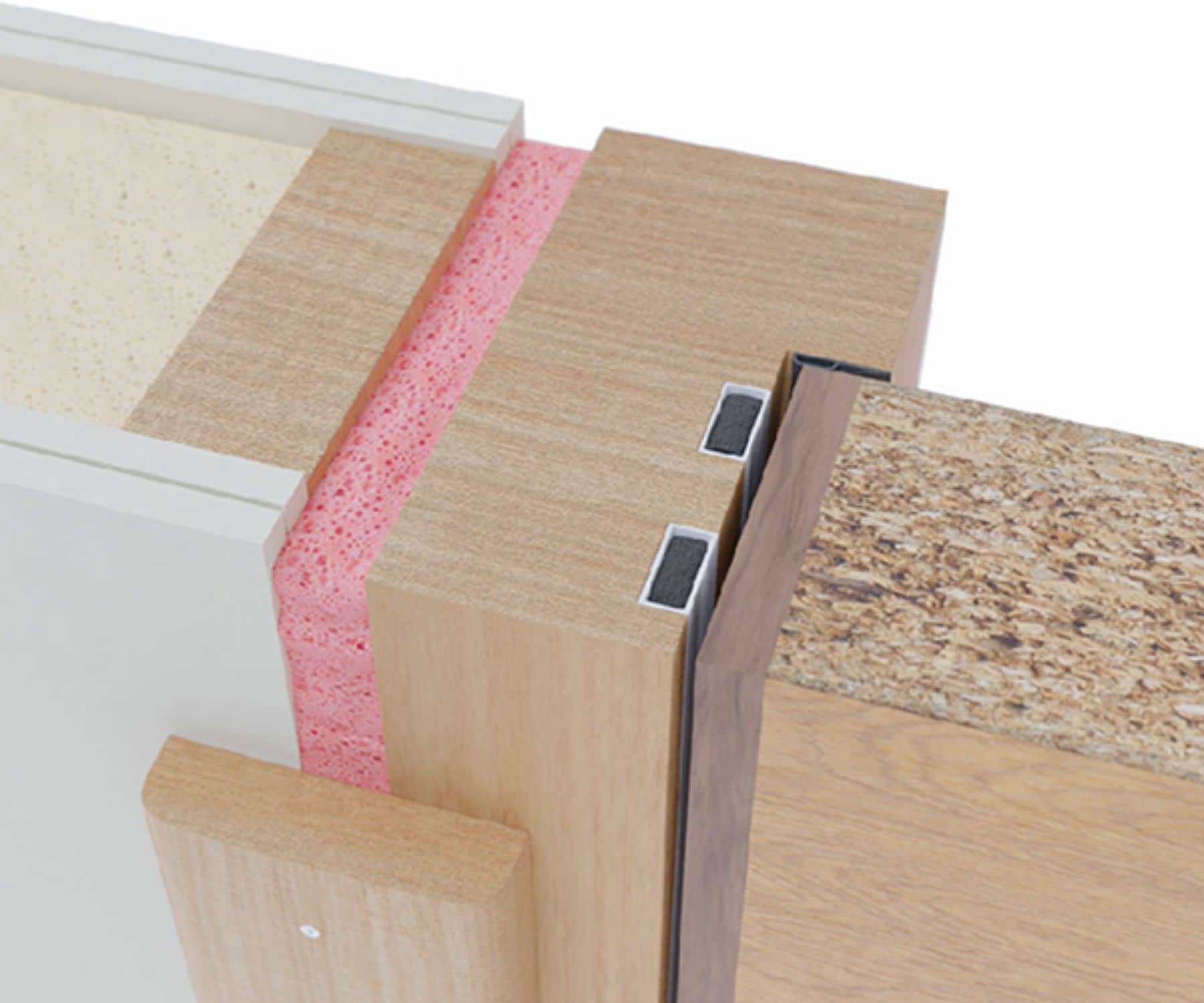
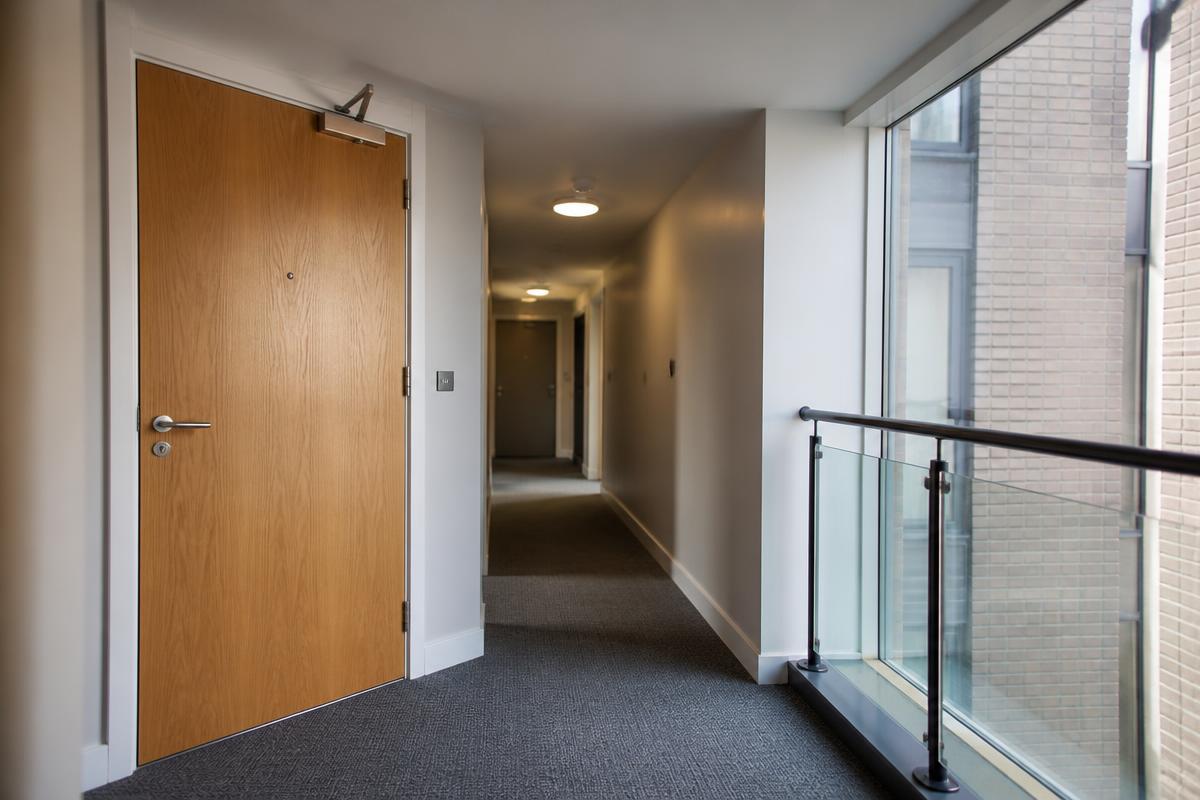
Fire doors and fire-resistant glazing are among the most heavily scrutinised elements of any passive system, and among the most commonly found to be defective. Both rely on the whole assembly performing as tested. For fire doors that’s the leaf, the frame, the intumescent and smoke seals, the hinges, the self-closing device and the gaps around the edges. For glazing, it’s the frame, seal, beading and glass type. Change one component for a non-tested alternative and the certification no longer applies.
Common failures include damaged or painted-over intumescent strips, excessive gaps, missing or failed closers, unapproved ironmongery and doors held open with wedges. The same discipline applies to glazed screens and vision panels sitting within compartment lines: they must be specified and installed as part of a tested assembly, not assembled from individually approved parts. Regular fire door inspections and prompt remediation or replacement are the only way to be certain they will perform.
Firestopping
Every time a pipe, cable, duct or tray passes through a fire-rated wall or floor, it creates an opening that must be sealed with a tested, compatible firestopping system. The same applies to linear gaps such as those between a wall head and the soffit above.
Firestopping is highly product-specific. The seal must be tested for that substrate, that service type and that fire rating, and it must be installed to the manufacturer’s specification. Generic filler or expanding foam is not firestopping, however tidy it looks. Compliant firestopping installations come with the evidence to prove what was used and where.
Cavity barriers
Concealed voids in walls, floors and roofs can allow fire and smoke to travel unseen across a building. Cavity barriers close these routes off, and they are frequently found missing or incorrectly installed in older buildings and in properties that have undergone refurbishment.
Structural fire protection
Steel loses strength rapidly at high temperatures. Intumescent coatings, boarding and sprays protect structural elements so the building maintains its integrity for the required period, giving occupants time to evacuate and firefighters time to work safely.
Ductwork
Ventilation ductwork passes through compartment lines and must be specified and installed to maintain the fire rating of the element they sit within.
Why passive fire protection matters legally
Under the Regulatory Reform (Fire Safety) Order 2005, the responsible person for a non-domestic building, or the common parts of a residential block, must carry out a suitable and sufficient fire risk assessment and put general fire precautions in place. Passive fire protection sits squarely within those precautions.
Since then, the framework has tightened considerably:
- The Fire Safety Act 2021 confirmed that the structure, external walls and flat entrance doors of multi-occupied residential buildings fall within the scope of the Fire Safety Order.
- The Fire Safety (England) Regulations 2022 introduced specific duties for buildings over 11 metres, including quarterly checks of fire doors in common parts and annual checks of flat entrance doors, as well as duties on information sharing with residents and the fire and rescue service.
- The Building Safety Act 2022 created the higher-risk building regime, the golden thread of information and a far greater emphasis on evidence, traceability and accountability throughout a building’s life.
The practical consequence for property managers is that good intentions are no longer enough. You need documented evidence of what was assessed, what was found, what was done about it and what products were used. Enforcement action for fire safety failings can result in unlimited fines and, in serious cases, custodial sentences.
The most common passive fire protection failures we find
In our experience surveying buildings across the South East, the same issues come up repeatedly:
- Unsealed service penetrations created by later trades, particularly in risers and above ceilings
- Fire doors with incorrect or missing ironmongery fitted during maintenance without reference to the tested specification
- Damaged or painted-over intumescent seals that will not expand as intended
- Missing cavity barriers in refurbished or extended areas
- No documentation — the work may have been done correctly, but without test evidence and installation records it cannot be demonstrated
- Non-compliant remedial work carried out cheaply, which has to be redone at full cost
The unifying theme is that most defects are created after handover, by everyday building work carried out without an understanding of where compartment lines run.
How to get on top of your passive fire protection
- Establish your baseline. A compartmentation survey and a fire door survey will tell you what you actually have, rather than what the drawings say you should have.
- Prioritise by risk. Not every defect is equally urgent. A clear, risk-rated remedial schedule allows you to plan work around budget cycles and justify spend to boards, trustees or leaseholders.
- Remediate with certified contractors. Use third-party accredited installers who work to tested specifications and provide product data and installation records for every item.
- Maintain and re-inspect. Passive fire protection degrades through use and is breached by other trades. Ongoing inspection regimes catch problems early, when they are cheap to fix.
- Keep the evidence. Auditable records are what turn compliance into something you can demonstrate, whether to an enforcing authority, an insurer or a building safety regulator.
This is exactly the sequence our Assess, Reinstate, Maintain (ARM) programme is built around: understand the position, put it right, and keep it right.
Frequently asked questions
Is passive fire protection a legal requirement?
Yes. While the legislation does not use the phrase as a heading, the general fire precautions required by the Regulatory Reform (Fire Safety) Order 2005, together with Building Regulations Approved Document B, oblige responsible persons to ensure compartmentation, escape routes and structural protection are adequate and maintained.
How often should passive fire protection be inspected?
Fire doors in the common parts of residential buildings above 11 metres must be checked quarterly, with flat entrance doors checked annually, under the Fire Safety (England) Regulations 2022. Compartmentation is typically surveyed on a rolling programme and reviewed whenever building work takes place. Your fire risk assessment should set the specific frequency for your building.
Who is responsible for passive fire protection?
The responsible person under the Fire Safety Order, which in practice is usually the building owner, the employer, the managing agent or the facilities manager. The duty cannot be delegated away, although the work itself is carried out by specialist contractors.
What is the difference between firestopping and compartmentation?
Compartmentation is the overall strategy of dividing a building into fire-resisting sections. Firestopping is one of the techniques used to maintain it, by sealing the openings and gaps created where services pass through those fire-resisting walls and floors.
Does passive fire protection need maintaining?
Yes. Seals degrade, doors are damaged, closers fail and new penetrations are created by ongoing building work. Passive systems are only as good as their current condition.
Talk to a certified passive fire protection specialist
Passive fire protection is only reassuring when you can see the evidence behind it. At Vanguard Fire Protection, we help property managers, housing associations, education providers, healthcare providers and block managers across Sussex, Hampshire, Kent, Surrey, Brighton and London understand exactly where they stand, put non-compliance right, and keep it that way.
If something does not meet the required standard, we will tell you plainly and show you how to fix it. No shortcuts, no box-ticking.
Call us on 0333 339 7225 or get in touch to discuss a compartmentation survey, fire door inspection or remedial programme for your buildings.